


Life Sciences - Immunology Track (.M.Sc)

What will you study, and why should you study at Bar-Ilan?
The medical revolution of recent decades has profoundly changed how we understand and manipulate the immune system: shifting from passive study of the body’s defense mechanisms to the active ability to decode, engineer, and redirect them. Rather than simply describing how immune cells respond to disease, contemporary research aims to precisely shape their activity to address autoimmune disorders, infections, and treatment resistance.
A prime example is the fight against cancer. Whereas research once focused on understanding how tumors “silence” or evade the immune system, the focus today is on immunotherapy: engineering immune cells to recognize and attack cancer cells with high precision. Through genetic and biochemical manipulations, immune cells can now be transformed into targeted effectors capable of overcoming tumor evasion mechanisms and limiting metastatic spread.
In this context, the Immunology track within the thesis-track Master’s degree in Life Sciences provides a fully research-oriented program for Bachelor’s degree graduates seeking to engage at the forefront of biological and medical research. The program combines hands-on experimental work in active research groups with advanced studies in immunology, equipping students with research skills, data analysis expertise, and experimental thinking—forming a foundation for careers in academia, the biotech industry, and advanced healthcare systems.
Career Opportunities
Graduates of the Master’s degree in Life Sciences can pursue careers in a wide range of fields and organizations, leading scientific projects in both the global research community and industry:
Biotechnology and pharmaceuticals: Research and development roles in pharmaceutical, cosmetics, and food companies
Healthcare: Medical laboratories in hospitals, clinical trial units, and medical equipment development
Public and academic sectors: Government research institutes, academic institutions (including continuation to a PhD), and environmental organizations
Program Structure
The duration of the thesis-track Master’s degree in Life Sciences is two years, during which students complete their research project and thesis (excluding any prerequisite completion year, if required).
Studies begin in Semester A, and the research phase officially starts on October 1 each year.
The program comprises 40 credit points:
24 credits in courses
16 credits for the research project (thesis)
The final grade is determined according to university regulations, with 75% based on the research project (thesis) and 25% based on course grades.
Program Courses
Of the 24 course credits:
22 credits are in Life Sciences courses
2 credits are earned through two Master’s seminars
Students may also take up to 4 credits of research-relevant courses in other departments. The research proposal is submitted at the end of the first year. Changes to the research topic or supervisor may require additional courses beyond the standard program.
Activities and Practical Experience
The curriculum is centered on a supervised research project (thesis) guided by a senior researcher from the Life Sciences Department. Students work directly with researchers, engage in innovative studies, and tackle scientific challenges using advanced technologies and modern research methods:
Molecular biology and genetics: Use of CRISPR, genetic engineering, and NGS sequencing
Microscopy and imaging: Confocal and fluorescence microscopy, live-cell imaging, and cell sorting (FACS)
Cell cultures and models: Work with stem cells, animal models, and organ-on-chip technology
Biochemical methods: Protein analysis using Mass Spectrometry, Western Blot, and ELISA
Admission Requirements
Academic average: Minimum 80 in a relevant Bachelor’s degree. Applicants with an average below 85 will be invited for an admissions committee interview.
Securing a supervisor: At the time of application, students must contact a potential supervisor and confirm their availability to provide guidance. Admission is contingent on the supervisor’s official approval.
Contact Information
Want to learn more about the M.Sc. in Life Sciences - Immunology Track?
- Associate Dean for Graduate Studies: Prof. Galit Shochat-Ofir
- Academic Advisor for Graduate Studies: Dr. Hila Alipantz
- Graduate Student Coordinator: Ms. Shani Hazan – Ls.Graduates@biu.ac.il
- Scholarships Officer: Ortal Zah
-

Prof. Barda-Saad Mira
972-3-5317311 -
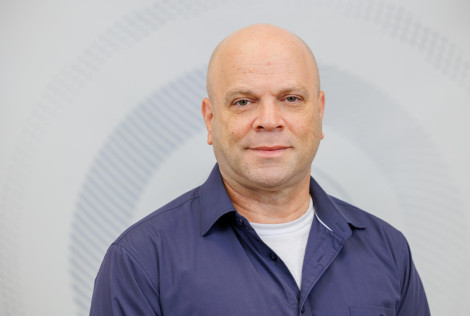
Prof. Ben-Aroya Shay
972-3-7384521 -
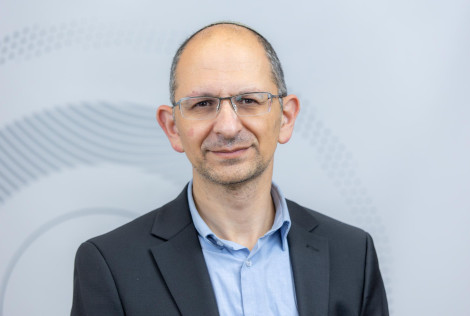
Prof. Cohen Cyrille
972-3-5317037 -
Prof. Cohen Haim
972-3-5318383 (office); 972-3-5317121 (lab) -
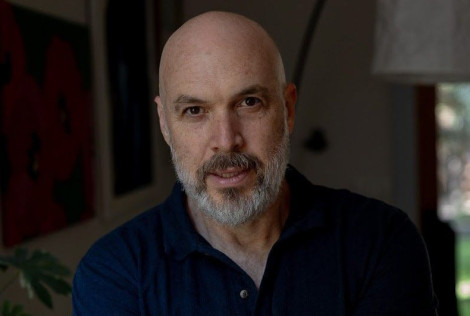
Prof. Efroni Sol
972-3-7384518 -

Prof. Ginsberg Doron
972-3-5318804 -

Prof. Okun Eitan
972-3-7384671 (office); 972-3-7384670 (lab) -

Prof. Opatowsky Yarden
972-3-5318330 -
Dr. Roichman Asael
972-3-7384295 -

Prof. Shav-Tal Yaron
972-3-5318589 -

Prof. Emeritus Sredni Benjamin
972-3-5318605 -

Prof. Yissachar Nissan
972-3-5318633 (office); 972-3-5318389 (lab); 972-3-5317489 (student room)

Last Updated Date : 08/03/2026