


Gerontology: Old Age Sciences (.M.Sc)

What will you study, and why should you study at Bar-Ilan?
Aging today is no longer defined by chronological age alone. It encompasses quality of life, health, social relationships, and the capacity of public and professional systems to respond to a rapidly growing population. In Israel, more than 900,000 adults are currently aged 65 and over, and addressing their needs raises complex medical, psychological, social, and organizational challenges. Working effectively in this field requires broad, interdisciplinary knowledge that views aging as both a biological and a social process.
Against this backdrop, Bar-Ilan University’s Master’s Program in Gerontology- Old Age Sciences is jointly offered by the Faculty of Life Sciences and the Department of Social Sciences and Health, providing students with an interdisciplinary understanding of the aging process. The program equips students with both applied and research-oriented tools for professional work with older adults.
The program offers two study tracks—a research track with a thesis and a non-thesis track, as well as a unique specialization, Caring for Older People, focusing on the psychological and therapeutic aspects of aging.
The degree is recognized for salary purposes in relevant health professions, approved by the National Insurance Institute, and prepares graduates for professional roles in companies providing products and services for the aging population.
Graduates of the program are eligible to apply for registration in the Israeli Gerontologists Registry of the Israeli Gerontological Society.
Career Opportunities
Program Structure
The M.A. in Gerontology is a two-year program (Fall and Spring semesters each year).
Courses are concentrated on Thursdays and include a combination of on-campus sessions and Zoom meetings. In the second year, students participate in a weekly practicum in addition to coursework.
Thesis Track (32 credits)
- 24 credits – required courses
- 4 credits – elective courses
- 4 credits – seminar
- External practicum (4 credits) counts as an elective
Non-Thesis Track (40 credits)
- 28 credits – required courses (including 4-credit external practicum)
- 4 credits – elective courses
- 8 credits – seminars
Specialization in Aging Care – Thesis Track (33 credits)
- 27 credits – required courses (including 5-credit external practicum)
- 2 credits – elective courses
- 4 credits – seminar
Specialization in Aging Care – Non-Thesis Track (41 credits)
- 33 credits – required courses (including 5-credit external practicum)
- 8 credits – seminars
Courses do not include requirements in Jewish studies, English, or general courses.
Students in the thesis track are required to fulfill the English requirement during the M.A. (exemptions are granted in accordance with university regulations).
Degree awarded:
Students in the Life Sciences track receive an M.Sc.
Students in the Social Sciences track receive an M.A.
Program Courses
Sample Core Courses
Immunology
Pharmacology
Adult Psychology
Age-Related Neurodegenerative Diseases
Biology of Aging and Age-Dependent Diseases
Microbiology: Introduction and Implications for Adult Life
Sample Elective Courses
Elder Care Nursing
Issues in Geriatrics
Selected Topics in Medicine
Psychopathology of Aging
Elder Abuse
Practical and Business Aspects of Aging
Activities and Practical Experience
The program combines in-depth theoretical knowledge with hands-on practical experience, tailored to the student’s chosen track. Students learn alongside leading researchers and instructors in life sciences, clinical psychology, and social sciences, gaining exposure to research methods and professional tools relevant to the field of aging.
In the practicum track, offered during the second year, students complete a practical placement of approximately two hours per week. During this placement, students apply targeted intervention methods, such as working with life stories of older adults or learning techniques to improve sleep patterns. The practicum is supported by ongoing supervision from experienced senior practitioners.
In the Caring for Older People specialization, students take courses on the psychopathology of aging, cognitive-behavioral therapy, trauma management, and elder abuse prevention. Additional courses are taught by geriatricians, clinical psychologists, and social workers, providing exposure to complementary medical and therapeutic aspects of aging.
Admission Requirements
Relevant bachelor’s degree: Minimum weighted average of 80.
The program is open to graduates in Life Sciences, health and allied health fields (Emergency Medicine, Nursing, Nutrition, Physiotherapy, Occupational Therapy), as well as Social Sciences and Behavioral Sciences.
Non-thesis track: Minimum average of 80 in the bachelor’s degree.
Thesis track: In addition to the bachelor’s degree average, a minimum average of 85 in research methods and statistics courses is required.
Aging Care specialization: Candidates are required to attend a personal interview.
Applicants from unrelated backgrounds: Required to complete up to 14 credits of preparatory courses.
Note:
Applicants with a scientific or health background register through the Faculty of Life Sciences.
Applicants with a social sciences background register through the Department of Social Sciences and Health.
Contact Information
Want to learn more about the Master’s Program in Gerontology-Old Age Sciences?
Program Directors:
Prof. Haim Cohen – Faculty of Life Sciences
Prof. Amit Sharira – Department of Social Sciences and Health
For advice and additional information:
Ms. Batel Pe’er | Phone: +972-3-5317297
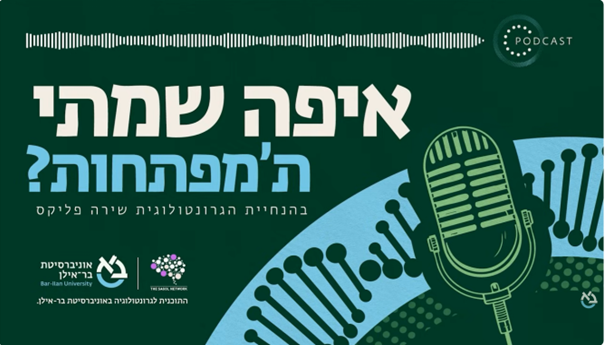
A podcast series (in Hebrew) “Where Did I Put My Keys,” focusing on aging through discussions of its biological mechanisms, cognitive changes, and broader implications for health and daily life.
Last Updated Date : 16/06/2026