


Microbiology and Virology
| Researcher | Research Focus |
|---|---|
| Prof. Banin Ehud |
|
Dr. Kranzler Chana | The group studies the ecology and biogeochemistry of marine phytoplankton. The research combines laboratory work with cultures and field studies of natural populations, incorporating molecular, biochemical, physiological, and geochemical approaches. Research topics include:
|
| Dr. Lobel Lior |
|
| Prof. Michaeli Shulamit |
|
| Dr. Pinto Yishay |
|
| Dr. Roichman Asael |
|
| Prof. Sarid Roni |
|
| Prof. Schwarz Rakefet |
|
| Dr. Yissachar Nissan |
|
Prof. Shulamit Michaeli
RNA biology in eukaryotic pathogens
How gene expression can be regulated during the life cycle of a parasite in the absence of transcriptional regulation; the role of non-coding RNAs and RNA modification
Research focus: The lab investigates the role of RNA modification on the function of ribosomes, spliceosomes and mRNA using molecular biology and biochemical approaches including structural aspects (with Prof. Ada Yonath). We study how Leishmania parasites are adapted to harsh environmental conditions and drugs using Omics studying the contribution of non-coding short and long non-coding RNAs. We study the role of small nucleolar RNAs as anti-sense regulators of development. The lab is developing a nano-drug to treat .שושנת יריחו
Take home message: Understanding RNA regulation and harnessing it to therapy can save the world!!
Methods: Molecular biology including RNA silencing, CRISPR and combined with editing, biochemistry of RNA, cell biology and imaging, infection in vitro and in vivo, nano-drugs from parasites to man
Hobbies: Gardening
Dr. Yishay Pinto
Microbiome Virology and Computational Biology
Not only bacteria: who are the viruses living inside us? The human virome is still largely unknown.
Research focus: The lab studies bacteriophages, viruses that infect bacteria and can reshape microbiome composition and human health. Research examines how phages influence bacterial communities, inflammation, and responses to drug treatments. By combining genomic sequencing, computational approaches, and clinical datasets, the lab maps a hidden viral world with medical relevance.
Highlighted takeaway: Viruses in the body may affect disease, treatment response, and microbiome stability, understanding them opens new paths for personalized medicine.
Methods: Metagenomics · Genomic sequencing · Language models · Machine learning · Synthetic biology · Clinical data analysis · Computational Biology
Hobbies: Hiking, Tabletop games
Dr. Asael Roichman
Nutrition, Microbiome, and Metabolites in Cancer and Health
How does what we eat influence cancer? Not just calories - chemistry and microbes.
Research focus: The lab studies how diet interacts with gut bacteria to produce metabolites that affect physiology and disease. We identify bioactive food-derived molecules, track how microbes modify them, and test their effects on liver function, systemic metabolism, and cancer development. A key focus is uncovering hidden nutrition chemistry that may explain why diet influences health and treatment response.
Highlighted takeaway: Nutrition and the microbiome are central to personalized medicine. Understanding active metabolites can reshape disease prevention, diagnosis, and therapy.
Methods: High-resolution metabolomics · HPLC separations · Multi-omics · Cellular & mouse models · Gut microbiology · Advanced computational tools
Hobbies: Hiking, Music, Reading, Having good time with family and friends
Prof. Ronit Sarid
Herpesvirus Biology
Orchestrating Infection: How do viral proteins and host genetic factors interact to drive the viral infection cycle?
Research focus: The lab investigates Kaposi’s sarcoma-associated herpesvirus (KSHV/HHV-8), the causative agent of several cancers in human, including Kaposi’s sarcoma, primary effusion lymphoma, and multicentric Castleman’s disease. The research spans the entire viral infection cycle, with a specific focus on the molecular events occurring during early and late stages of infection. We are particularly interested in the complex interplay between viral gene products and cellular pathways, exploring the host-pathogen 'arms race' that governs viral pathogenesis.
Highlighted takeaway: Beyond their role as pathogens, viruses function as molecular probes of cell biology, reflecting an evolutionary arms race that has continuously sculpted the landscape of host biology
Methods: Virology · Molecular & cell biology · Fluorescence microscopy ·
Hobbies: Hiking, spending time with family and friends
Prof. Ehud Banin
Biofilms, Microbiology, and Antimicrobial Strategies
Can bacterial communities outsmart antibiotics and the immune system? Microbes in biofilms band together in protective matrices that make infections chronic and hard to treat, revealing why traditional therapies fail.
Research focus: The lab studies bacterial biofilms — complex communities of microbes embedded in self-produced matrices — to uncover the signals and processes that drive their formation, resistance to immune responses and antibiotics, and inter-species communication. Research aims to understand how biofilms develop and persist in clinical and environmental settings and to discover new strategies to prevent and eradicate biofilm-associated infections, including identifying natural anti-biofilm compounds and designing effective antimicrobial interventions.
Highlighted takeaway: Biofilms are central to many chronic and device-associated infections, and understanding their biology opens paths to innovative treatments.
Methods: Microbiology · Biofilm modeling · Physiological and biochemical assays · Genetic tools · Antimicrobial compound screening · Signal analysis · Controlled growth technologies · Synthetic biology
Dr. Chana Kranzler
Phytoplankton Ecology and Marine Virus Dynamics
How do ocean microbes shape Earth’s climate? Phytoplankton drive half of global photosynthesis and play a critical role in global carbon cycling.
Research focus: The lab investigates the ecology, physiology and molecular ecology of marine phytoplankton — the photosynthetic microbes at the base of marine food web and contribute nearly half of the primary production of the planet. Our research aims to identify and characterize the microscale interactions, such as virus infection of phytoplankton, that shape phytoplankton metabolism, growth, mortality and biogeochemical cycling across diverse ocean environments.
Highlighted takeaway: Understanding the interplay between phytoplankton community dynamics and the prevalence and impacts of virus infection reveals how microscale interactions in the ocean underscore marine ecosystem function and global carbon cycling.
Methods: Oceanographic field sampling · Phytoplankton ecophysiology · Marine viral ecology· Molecular and genomic analyses · Metatranscriptomics · Biogeochemical profiling · Phytoplankton–virus interactions
Hobbies: Backpacking, swimming and houseplants
Dr. Lior Lobel
Microbiome, Diet, and Host Health
Can what we eat reshape our health through the microbes in our gut? Diet-driven chemical changes in gut bacteria create signals that influence immunity, metabolism, and disease.
Research focus: The lab studies how diet interacts with gut microbes to produce metabolites and modifications that affect host physiology and disease. This includes profiling post-translational modifications in bacterial proteins, analyzing how dietary changes reshape the bacterial proteome, and determining how microbial activity influences host epithelial cells and organs, such as in colon cancer.
Highlighted takeaway: Microbial responses to dietary components help explain how nutrition impacts health and disease via chemical signals in the gut.
Methods: Microbiome profiling · Proteomics · Post-translational modification analysis · Diet manipulation studies · Host–microbe interaction assays · Molecular biology · Animal models· Metabolite analysis.
Hobbies: Computers, sport (watching :)), and spending time with family.
Prof. Nissan Yissachar
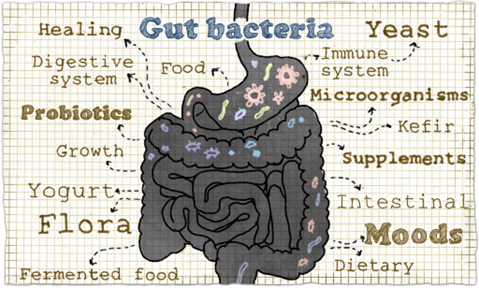
Host–Microbiome Interactions and Immune Decision-Making
Can gut microbes direct immune choices? The trillions of microbes in our gut communicate with immune and nervous systems, influencing whether the body tolerates or fights inflammation, in health and disease.
Research focus: The lab investigates the cellular, molecular and genetic mechanisms that enable communication between the gut microbiome, the intestinal immune system, the enteric nervous system and the epithelium. Research aims to map how these communication networks guide immune decision-making — balancing inflammation and tolerance — in health and in autoimmune or chronic inflammatory diseases such as inflammatory bowel disease. Studies combine unique gut organ culture systems, microscopy, genomics and systems biology approaches in real time ex-vivo.
Highlighted takeaway: Gut microbiome–host cross-talk is a central regulator of immune behavior, with implications for inflammation, autoimmunity, cancer and systemic health.
Methods: Gut organ culture · High-resolution microscopy · Genomics · Molecular biology · Systems biology · Multi-omics analysis · Host–microbiome signaling assays
Hobbies: Music (classic rock, guitars…), cooking and eating!