
Life Sciences – Computational Biology Track (.M.Sc)

What will you study, and why should you study at Bar-Ilan?
Today’s biology goes far beyond traditional laboratory experiments. Advances in technology—from high-throughput genome sequencing and advanced imaging to real-time tracking of gene and cellular activity—have turned every biological experiment into a massive source of data. To truly understand what happens in the body during disease or how treatments develop and take effect, scientists must speak the language of data.
This is where computational biology comes in: a fusion of biology, mathematics, and programming that translates data into insights driving breakthroughs in science and medicine. If you want to be among those making scientific decisions, interpreting results rather than simply measuring them, this is the language of modern research.
The M.Sc. in Life Sciences - Computational Biology track at Bar-Ilan University places you at the forefront of this field. Here, you learn to turn data into a driving force for research: building mathematical models of biological systems, analyzing genetic sequences, interpreting omics data, and developing algorithms that explain how life functions at the gene, cell, and organism levels. These skills are already powering personalized medicine, drug development, advanced genomics, and next-generation biotechnologies—and opening doors to highly sought-after careers in bioinformatics, research, and innovation.
Career Opportunities
The demand for graduates in Computational Biology is steadily increasing. Organizations in the scientific and technological industries are seeking professionals capable of extracting insights from complex biological data.
Graduates of the program pursue roles such as:
Biological data analysts in research and genetics institutes
Researchers in biotechnology, pharmaceutical, and neuroscience companies
Algorithm and machine learning developers for biological applications
R&D positions in companies specializing in sequencing, genomics, and medical information systems
Research and development in data-driven biological start-ups
Research assistants and computational lab managers in academic institutions
Positions in clinical laboratories and companies involved in clinical trials and genetic regulation
Program Structure
The program is completed over two years and comprises a total of 40 credits:
24 credits of advanced courses and seminars
16 credits for a supervised research thesis
Annual participation in the departmental colloquium
The first phase of the program focuses on building a strong scientific foundation and familiarizing students with the research environment. In the second phase, students conduct an independent research project, including experimental design, data collection, and thesis writing.
Program Courses
Advanced Courses and Seminars
Students choose from a variety of courses in bioinformatics, machine learning, systems biology modeling, and omics data analysis.
Participation in two seminars is required (one computational and one either computational or biology-focused).
Up to 4 credits may be taken from relevant courses in other departments.
Elective Courses
The remaining credits can be completed through elective courses in areas such as:
Computational genomics
Machine learning and data analysis
High-throughput data processing
Systems biology modeling
Structural biology and other computational applications
Up to 4 credits may be taken from relevant courses in other departments.
Seminars and Research Proposal
Two seminars are held during the program
Submission of a research proposal at the end of the first year
Annual enrollment in the departmental colloquium (no credits)
Activities and Practical Experience
Computational biology combines deep biological understanding with advanced computational skills. In the M.Sc. program, you will engage directly with computational-biology research, working with real datasets that reflect the challenges of modern science.
During the program, you will:
Analyze real datasets from genetics, epigenetics, systems biology, and neuroscience
Develop computational models to understand biological processes, genetic regulation, and molecular interactions
Apply advanced methods in machine learning, omics analysis, and high-throughput data processing
Work with bioinformatics tools, algorithms, and analytical platforms to uncover complex biological patterns
Receive personalized guidance from leading researchers while developing skills in independent work, precise analytical thinking, and professional academic presentation
Hands-on experience will allow you to build genuine expertise at the interface of biology and data—a skill set highly valued in biotechnology, digital medicine, genomics, and other scientific and technological fields.
Admission Requirements
A relevant bachelor’s degree in Computational Biology with an average grade of 80 or above
Applicants with an average below 85 may be required to attend an admissions interview
Graduates of Life Sciences or Computer Science may need to complete prerequisite courses
In some cases, applicants from other backgrounds may be considered, subject to the approval of the admissions committee and the supervisor
Securing a supervisor in the computational field and obtaining their approval is mandatory
Lists of potential supervisors are available on the Faculty website
Students who did not complete a bachelor’s degree in Computational Biology may undertake a preparatory year in order to gain full admission to the program. The preparatory year is designed for:
Students with a background in Exact Sciences or Computer Science, who will take preparatory courses in Biologyץ
Students with a background in Life Sciences, who will take preparatory courses in Computer Science.
Contact Information
Want to learn more about the M.Sc. in Life Sciences - Computational Biology Track?
- Associate Dean for Graduate Studies: Prof. Galit Shochat-Ofir
- Academic Advisor for Graduate Studies: Dr. Hila Alipantz
- Graduate Student Coordinator: Ms. Shani Hazan – Ls.Graduates@biu.ac.il
- Scholarships Officer: Ortal Zah
-
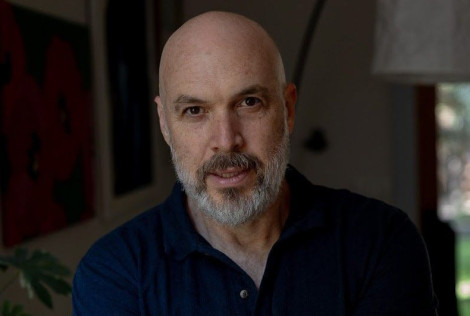
Prof. Efroni Sol
972-3-7384518 -
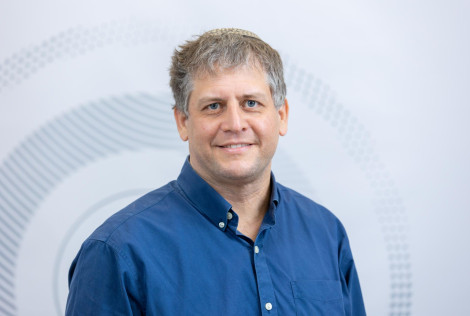
Prof. Levanon Erez
972-3-7384523 -

Prof. Emeritus Meirovitch Eva
972-3-5318049 -
Prof. Ofran Yanay
972-3-5317792 (office); 972-3-5317954 (lab) -
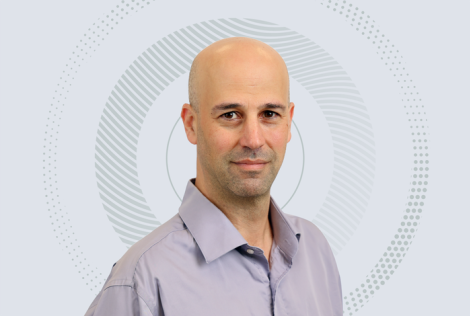
Prof. Opatowsky Yarden
972-3-5318330 -
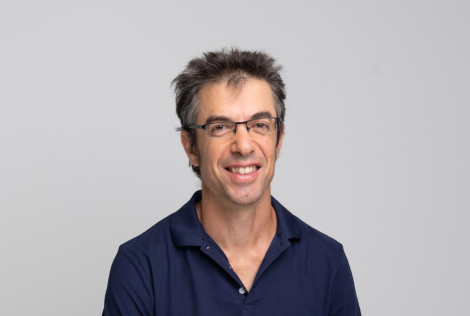
Prof. Orenstein Yaron
972-52-2309887 -

Dr. Pinto Yishay
972-3-5317317 -
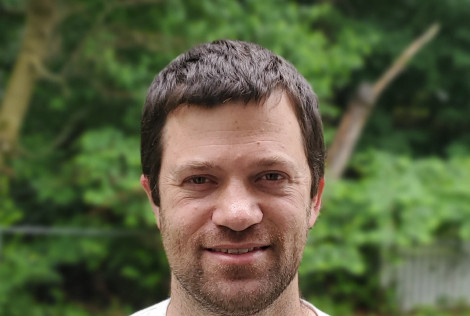
Dr. Roichman Asael
972-3-7384295 -
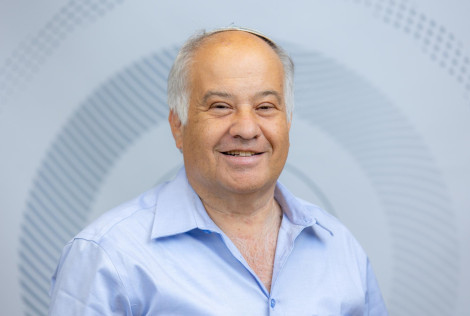
Prof. Unger Ron
972-3-5318124
Last Updated Date : 16/03/2026