
Neuroimmunology and Neurodegenerative Diseases
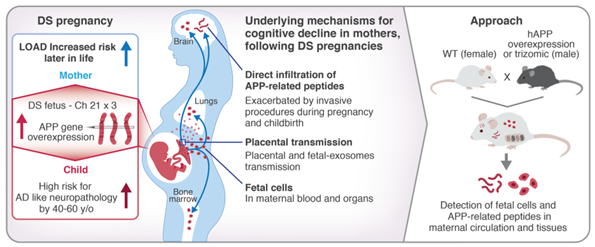
- The Feto-Maternal Imprint: Mapping how pregnancies with a Down syndrome (trisomy 21) fetus significantly elevate a mother’s risk for late-onset Alzheimer’s. We track how toxic proteins cross the fetal-maternal barrier to seed amyloid deposition in the maternal brain.
- The Meningeal Architecture: Uncovering how adaptive B cells organize into aggressive immune hubs (Ectopic Lymphoid Structures) at the brain's boundaries, using light-sheet microscopy to reveal how these structures drive aging and pathology.
- The Trisomy 21 Blueprint: Dissecting why individuals with Down syndrome face early-onset Alzheimer’s. By tracking how lifelong immune dysregulation interacts with amyloid accumulation, we aim to discover targets that protect both DS and broader Alzheimer's populations.
- Prof. Okun Eitan
Mechanism of how Sex and Pregnancy affect Neuroimmunology and Age-related Brain Diseases
How does the immune system influence how we think, remember, and age? The brain does not work alone. It is in constant communication with the immune system, and this dialogue powerfully shapes cognition across life and during disease.
What the lab explores. The lab studies how immune activity outside the brain influences memory, aging, and vulnerability to brain disorders such as Alzheimer disease and Down syndrome, and how biological sex modulates these effects. A unique line of research investigates how pregnancy and fetal development leave lasting marks on the mother’s brain. This work shows how immune signals transferred during pregnancy can reshape brain function and affect cognition many years later, opening new possibilities for prevention. The lab views brain disease as a whole body process that connects immunity, development, and aging.
The lab utilized methods that include Cell sequencing, advanced whole-brain imaging, unique transgenic mouse models, immunology, and behavioral studies.
Hobbies: Classic rock, guitars, and everything in between.
- Prof. Emeritus Brodie Chaya
Cancer stem cells from brain tumors for analyzing disease mechanisms and for drug and cell therapy screening
Three dimensional human cultures - novel models of neural rare disorders and muscular dystrophies
Exosomes in intercellular communication and drug delivery in neural and muscle diseases and brain tumors.
Non-coding RNAs in cancer and degenerative disorders
Unique signaling pathways in brain tumors and neurodegenerative diseases