


Thesis-Track Master’s Degree in Life Sciences (.M.Sc)
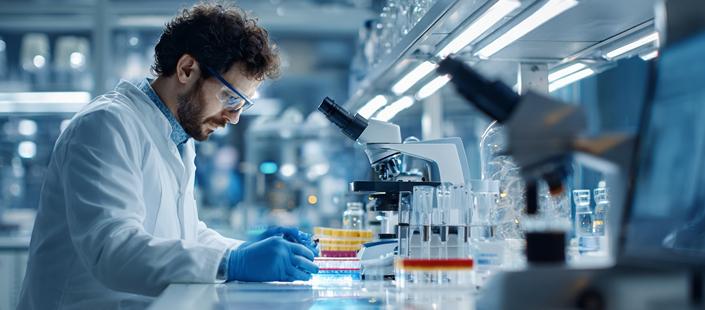
What will you study, and why should you study at Bar-Ilan?
Biological systems around us—from single cells to entire ecosystems—depend on complex interactions: communication between proteins, cellular signaling pathways, dynamic genetic regulation, interactions between organisms, and the influence of environmental factors on physiological stability.
Despite remarkable scientific progress, many fundamental questions remain open: How do cells respond to stress? How does the immune system recognize and counter new threats? Which mechanisms maintain physiological stability? How do environmental changes shape the behavior of organisms and ecological systems?
The Thesis-Track Master’s Degree in Life Sciences at Bar-Ilan University allows students to explore these questions in depth using advanced technologies such as genetic sequencing, structural biology, advanced imaging, and computational modeling, alongside a deep study of the mechanisms that govern life. The program combines thesis research in active laboratories with advanced theoretical coursework, providing access to cutting-edge research infrastructure, interdisciplinary expertise, and personalized mentorship from leading researchers.
Students gain exposure to a broad range of research areas, including microbiology, cell biology, genetics and genetic engineering, neurobiology, ecology, marine biology, immunology, biochemistry, botany, and other advanced topics. They develop critical skills for modern researchers: analytical thinking, biological data analysis, precise experimental work, and the ability to generate evidence-based insights.
The program is designed for graduates of life sciences and related fields who wish to deepen their knowledge base, engage in front-line scientific research, and contribute to solutions in health, biotechnology, agritech, genetics, and environmental sciences.
Career Opportunities
A Thesis-Track Master’s degree equips graduates with advanced analytical and practical skills, opening doors to a wide range of prestigious careers:
Biotech and Pharmaceutical Industry: Key roles in research and development (R&D) at pharmaceutical companies, biotechnology firms, and start-ups, as well as positions in clinical trial units
Academia and Research: Integration into research institutes, academic institutions, and medical laboratories in hospitals
Diverse Industries: Research and development roles in agriculture, food production, and cosmetics
Public and Environmental Sector: Positions in environmental organizations and the Ministry of Environmental Protection
Program Structure
The thesis-track is completed in approximately two years (excluding any prerequisite year) and comprises 40 credits:
24 credits of coursework and seminars, including:
Advanced core courses in life sciences
Two departmental seminars
Participation in the departmental colloquium
Up to 4 credits from relevant courses in other departments (with approval)
16 credits for the research thesis
From the start of the program, students are integrated into an active laboratory. At the end of the first year, students must submit a detailed research proposal to the Faculty committee, including objectives, significance, work plan, and preliminary results.
Final Grade Calculation:
75% based on the thesis
25% based on the average of coursework grades
Program Courses
Sample Courses in the Program
Molecular and Cellular Biology
Molecular Biology of Aging
Cell Growth and Death Regulation
The RNA World
Clinical Genetics
Immunology and Medical Biology
Cancer Immunology and Immunotherapy
Immune System Regulatory Mechanisms
Rare Genetic Diseases: Sequencing, Diagnosis, and Treatment
Cancer as an Infectious Disease
Neurobiology and Neuroscience
Biological Mechanisms of Learning and Memory
Effects of Addictive Substances on Brain Function
Structure and Function of the Nervous System
Biochemistry and Physiology
Cardiovascular Physiology
Digestion and Excretion
Social Processes in Bacteria
Adaptive Mechanisms to Environmental Stress
Ecology, Flora, and Environment
Plant Ecology in Israel
Plant Diseases and Environmental Implications
Advanced Technologies in Scientific Research
Biomimetics – Nature-Inspired Problem Solving
Methodological Core Courses
Principles of Scientific Instrumentation and Data Analysis
Biostatistics and Introduction to Clinical Trials
Introduction to Computer Science for Biologists (new course)
Activities and Practical Experience
The research-focused nature of the program allows each student to join an active laboratory from the very beginning and participate in cutting-edge research conducted across the faculty’s diverse research groups.
Core Research Areas Include:
Immunology, biochemistry, molecular biology, cell biology (including cancer cells), genetics and genetic engineering, medical and general microbiology, virology, neurobiology, marine biology, ecology and environmental biology, animal and plant physiology, botany, systems biology, pharmacology, structural biology, photobiology, molecular parasitology, gerontology, human and animal fertility, bioinformatics, and vision sciences.
Specialized programs or tracks (e.g., Biotechnology, Computational Biology, Vision Sciences, Nanotechnology) include additional academic requirements tailored to the discipline.
Advanced research techniques students will experience:
CRISPR, DNA/RNA sequencing, genetic cloning
Confocal, fluorescence, and 3D microscopy
Cell culture, stem cells, and animal models
Organ-on-Chip, microfluidics, and synthetic biology
Protein analyses (Mass Spectrometry, Western Blot, ELISA)
Spectral flow cytometry and optogenetics
Omics analyses: genomics, proteomics, metabolomics
Computational modeling and bioinformatics
Marine research: underwater imaging, marine research equipment, and submersible robotics
Laboratory experience provides students with advanced research skills, including experimental design, precise execution under controlled conditions, statistical analysis and biological interpretation, scientific report writing, and teamwork in a multidisciplinary environment.
Admission Requirements
Minimum average: 80 in a relevant bachelor’s degree
Applicants with an average below 85 may be required to attend an admissions interview
Supervisor requirement: A suitable supervisor must be identified before formal admission
Students without a background in life sciences may be required to complete a preparatory year (minimum average: 80)
English proficiency: Equivalent to exemption level
Contact Information
Want to learn more about the Thesis-Track Master's Degree in Life Science?
- Associate Dean for Graduate Studies: Prof. Galit Shochat-Ofir
- Academic Advisor for Graduate Studies: Dr. Hila Alipantz
- Graduate Student Coordinator: Ms. Shani Hazan – Ls.Graduates@biu.ac.il
- Scholarships Officer: Ortal Zah
Last Updated Date : 08/03/2026