
Structural and Computational Biology
Computational Biology, Genomics, and Systems Medicine: Translating Digital Oceans into Clinical Decisions
Data Mining • Synthetic Biology • Multi-Omics • Molecular Machines
At Bar-Ilan University’s Faculty of Life Sciences, we write the algorithms that decode life. We treat tumors, genomes, and microbiomes not as isolated biological entities, but as complex information networks. By combining artificial intelligence with high-throughput sequencing, we read the hidden scripts of disease to advance personalized therapies.
Deciphering the Network: Computational Oncology & RNA Dynamics
How can a computer use big data to help a doctor choose a more precise cancer treatment?
Cancer is a dynamic disease, driven by shifting networks of disrupted cellular signals. Our labs integrate massive multi-omic data streams—blending DNA mutations, RNA expression, and epigenetic tags—to identify molecular changes associated with the transition from healthy tissue to disease, with a particular focus on breast and liver cancers.
But the genome is only the first chapter. We look beyond DNA to the dynamic world of A-to-I RNA editing. Cells constantly modify RNA after it is copied from DNA, adding another layer of biological information that can influence cellular function, adaptation, and disease. We build computational tools, algorithms, and genome-wide screening approaches to detect and map RNA-editing patterns in health and disease.
By pairing single-cell sequencing and high-throughput genomic profiling with T-cell receptor repertoire analysis, we identify patterns in tumor and immune-system behavior. Integrating these molecular patterns with clinical data can help build a more precise picture of disease and support the development of therapies tailored to the individual.
The Inner Ecosystem: Mining the Virome and Nutrition Chemistry
Who are the viruses living inside us, and how does what we eat influence our health?
Human health is governed by an invisible, microscopic ecosystem, and we are mapping the interactions within it. While medicine has long focused on bacteria, we explore a far less understood component of the microbiome: the human virome. We study bacteriophages—viruses that infect bacteria—to understand how they reshape our microbiome, influence inflammation, and affect responses to drug treatments.
This viral landscape changes based on what we consume. We look at diet not as mere calories, but as complex, systemic chemistry. Our teams track how food-derived molecules travel through the body, how gut microbes modify them, and how the resulting metabolites impact liver function, systemic metabolism, and cancer development.
To map this uncharted territory, we deploy high-resolution metabolomics, HPLC separations, cellular and mouse models, genomic sequencing, and advanced computational tools, uncovering biochemical and microbial mechanisms that influence human physiology and disease.
Bio-Algorithms & Structures: Modeling the Gates of the Cell
How can abstract mathematical algorithms reveal the physical, structural rules of life?
How does a string of code become a living, breathing entity? To bridge computational models and the physical structures of biological systems, we approach life from two complementary directions: developing algorithms and predictive models of biological structure and function, while also resolving the molecular structures through which cells receive and transmit information.
Cells survive by turning external cues into rapid internal decisions, and we study cell-surface receptors—specifically receptor tyrosine kinases—which assemble and shift shape like molecular machines.
Using X-ray crystallography and single-particle electron microscopy, we resolve these molecular structures at different stages of their activity, revealing how they transmit information across the cell membrane, and how structural and signaling disruptions are associated with biological processes and diseases including neurodegeneration and cancer.
In parallel, we build genetic algorithms, machine-learning models, and deep neural networks to study protein structure and folding, non-coding RNA, and predict how genetic variants affect protein-DNA and protein-RNA interactions. We combine large-scale biological data analysis with predictive modeling to uncover principles underlying gene regulation, biological structure, and function.
Researchers
-
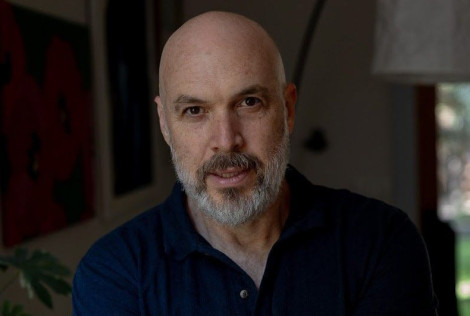
Prof. Efroni Sol
972-3-7384518 -
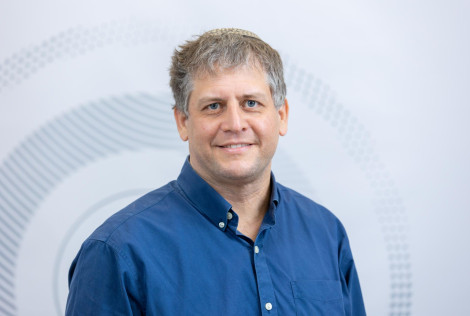
Prof. Levanon Erez
972-3-7384523 -

Prof. Emeritus Meirovitch Eva
972-3-5318049 -
Prof. Ofran Yanay
972-3-5317792 (office); 972-3-5317954 (lab) -
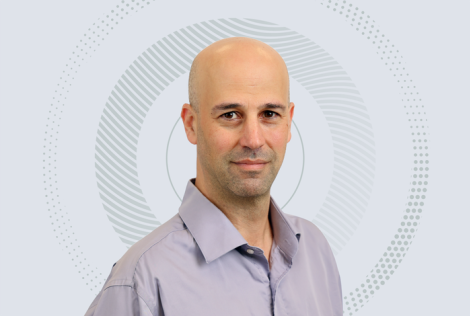
Prof. Opatowsky Yarden
972-3-5318330 -

Dr. Pinto Yishay
972-3-5317317 -
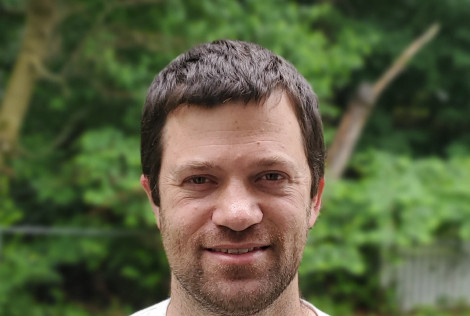
Dr. Roichman Asael
972-3-7384295 -
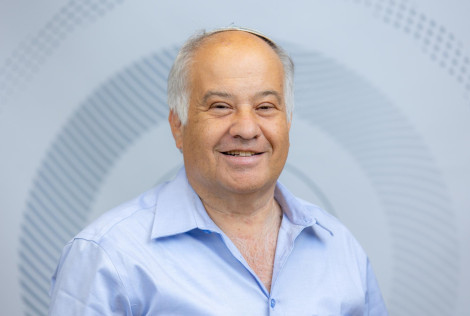
Prof. Unger Ron
972-3-5318124