


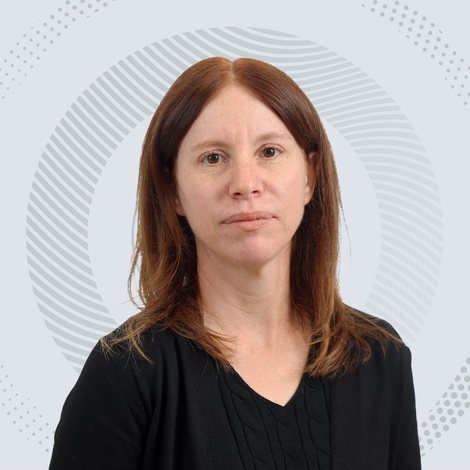
Dr. Einat Zalckvar
Cell Biology, Peroxisomes, Rare Diseases, Organelle Interplay, Genetics
CV
Research
Peroxisomes: From Basic Research to Rare Diseases
The Zalckvar Lab studies peroxisomes and their roles in cell biology, focusing on these cellular organelles and the essential metabolic processes they carry out, including the breakdown of fatty acids and hydrogen peroxide, as well as the production of molecules required for cellular function. Although peroxisomes were discovered nearly 70 years ago and are known to be important for human health, many aspects of their function and their interplay with other cellular organelles remain poorly understood.
The lab investigates the molecular and genetic mechanisms linking peroxisomal function to disease. Its research includes rare genetic diseases caused by peroxisomal dysfunction, with the aim of uncovering their molecular basis and identifying potential avenues for diagnosis and treatment. In parallel, the lab explores how studying peroxisomes and organelle interplay may advance our understanding of more common conditions, including hearing loss and infertility.
The lab’s distinctive approach combines systematic investigation of rare diseases with fundamental cell biology research into the underlying biological mechanisms. Its long-term goal is to translate biological discoveries into medical insights that may benefit patients.
Courses
- 87-805-48-01 — The Cell: Structure and Function
- 87-809-61-01 — Seminar on Rare Diseases for the Non-Thesis M.Sc. Program
- 87-804-27-01 — Seminar on Advanced Topics in Cell Biology
- 87-805-63-01 — Rare Genetic Diseases: Sequencing, Diagnosis and Treatment
Publications
Selected Publications
- Peer M, Angel A, Zang Y, et al., Zalckvar E (2025). A cryo-electron microscopy structure of yeast Pex5 in complex with a cargo uncovers a novel binding interface. Journal of Cell Science.
https://doi.org/10.1242/jcs.263891
Reveals a previously unknown binding interface involved in cargo recognition by Pex5, advancing our understanding of protein import into peroxisomes. - Angel A, et al., Zalckvar E (2025). Using Chanarin-Dorfman syndrome patient fibroblasts to explore disease mechanisms and new treatment avenues. Orphanet Journal of Rare Diseases.
https://doi.org/10.1186/s13023-025-03708-7
Uses patient-derived cells to uncover cellular mechanisms underlying Chanarin-Dorfman syndrome, including effects on mitochondria and peroxisomes, and to explore potential therapeutic approaches. - Zalckvar E, Schuldiner M (2022). Beyond rare disorders: A new era for peroxisomal pathophysiology. Molecular Cell 82: 2228–2235.
https://doi.org/10.1016/j.molcel.2022.05.024
Examines how insights from rare peroxisomal disorders can illuminate the roles of peroxisomes in more common diseases and open new directions for diagnosis and treatment.
Media
Decoding Peroxisomal Disorders – With Dr. Einat Zalckvar | Dangoor Center for Personalized Medicine, Bar-Ilan University | 2026 | Podcast interview on rare peroxisomal diseases, advanced diagnostic approaches, and personalized treatments.
Last Updated Date : 12/10/2026