


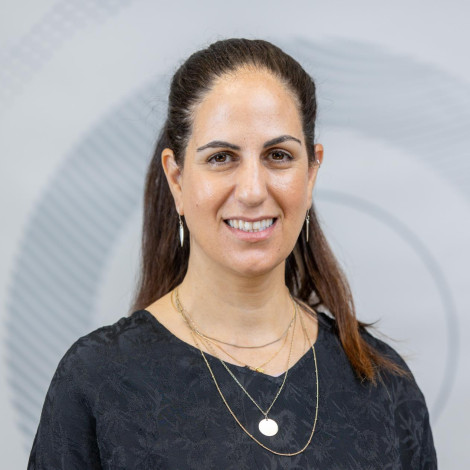
Dr. Moran Dvela-Levitt
Protein trafficking, Protein Quality control, Kidney diseases, rare diseases, Imaging
Research
Intracellular Protein Trafficking Lab
Every cell in the human body contains billions of proteins that must be transported to specific locations to perform their functions. This process relies on intricate cellular trafficking machinery that ensures proteins reach their correct destinations. Disruptions in protein trafficking and quality control can lead to the accumulation of misfolded or misplaced proteins, creating cellular “traffic jams” that contribute to a range of human diseases, including neurodegenerative disorders such as Alzheimer’s and Parkinson’s diseases.
Although the mechanisms governing intracellular protein trafficking have been studied for decades, fundamental questions remain about how proteins are sorted, transported, and maintained in their appropriate cellular locations. Dr. Moran Dvela-Levitt’s laboratory investigates the molecular mechanisms regulating protein trafficking, protein quality control, and cellular homeostasis, as well as how their dysfunction contributes to human disease. Particular attention is given to rare genetic disorders, including inherited kidney diseases associated with abnormal protein processing and accumulation.
Because protein sorting, trafficking, and localization are central to the laboratory’s research, advanced imaging technologies play an essential role in its experimental approach. The laboratory uses high-content screening (HCS), combining automated microscopy with quantitative image analysis, to visualize proteins in their cellular environment and investigate intracellular trafficking pathways. Large-scale pharmacological and genetic screens enable the identification of cellular factors that regulate protein transport and the discovery of compounds capable of correcting trafficking defects.
By integrating cell biology, molecular approaches, high-content imaging, and functional screening, the laboratory aims to uncover fundamental mechanisms of protein trafficking and quality control and translate these discoveries into potential therapeutic strategies for rare diseases and other disorders associated with defective protein processing.
Courses
- 80202 – Biochemistry B
- 80406 – Recalculating route: The journey of cellular proteins to their final destination
- 80905 – Seminar:
- 80403 – Molecular Seminar
Publications
Selected Publications
1. Lenchisky, C., Majadly, A. M., Berger, I. B., Biton, D., Sarsour, A. D., Arbeli, N., Cohen, T., Amos, N., Kinstlinger, S., Cohen, O., Horwitz, E., & Dvela-Levitt, M. (2026). IRE1–XBP1 driven induction of TMED9 stabilizes ATF6 during ER stress to promote cell survival. Cellular & Molecular Biology Letters, 31, 100.
https://doi.org/10.1186/s11658-026-00931-x
Identifies TMED9 as a regulator connecting two branches of the unfolded protein response, showing that it stabilizes ATF6 during endoplasmic reticulum stress and promotes cell survival, including in tumor cells.
2. Dvela-Levitt, M., Kost-Alimova, M., Emani, M., Kohnert, E., Thompson, R., Sidhom, E.-H., Rivadeneira, A., Sahakian, N., Roignot, J., Papagregoriou, G., et al. (2019). Small molecule targets TMED9 and promotes lysosomal degradation to reverse proteinopathy. Cell, 178(3), 521–535.e23.
https://doi.org/10.1016/j.cell.2019.07.002
Identifies TMED9 as a key mediator of the intracellular accumulation of misfolded proteins and demonstrates that the small molecule BRD4780 can promote their lysosomal clearance, establishing a potential therapeutic strategy for inherited protein-misfolding disorders, including MUC1-associated kidney disease.
3. Sarsour, A. D., Kinstlinger, S., Nizar, R., Amos, N., Arbeli, N., Kazimirsky, G., Bronshtein-Berger, I., Fried, I., Unger, R., Brodie, C., & Dvela-Levitt, M. (2025). Targeting the cargo receptor TMED9 as a therapeutic strategy against brain tumors. Cells, 14(11), 772.
https://doi.org/10.3390/cells14110772
Demonstrates that TMED9 supports the survival, migration, and self-renewal of glioma stem cells, and that targeting it with BRD4780 suppresses tumor-associated cellular functions and enhances the effects of temozolomide in experimental models, suggesting a potential therapeutic approach for brain tumors.
4. Dvela-Levitt, M., Shaw, J. L., & Greka, A. (2021). A rare kidney disease to cure them all? Towards mechanism-based therapies for proteinopathies. Trends in Molecular Medicine, 27(4), 394–409.
https://doi.org/10.1016/j.molmed.2020.11.008
Examines how research into rare inherited kidney diseases can reveal shared mechanisms of protein misfolding and defective intracellular trafficking, highlighting opportunities to develop mechanism-based therapies for a broader range of proteinopathies.
5. Živná, M., Dostálová, G., Barešová, V., et al., including Dvela-Levitt, M. (2025). Misprocessing of α-galactosidase A, endoplasmic reticulum stress, and the unfolded protein response. Journal of the American Society of Nephrology, 36(4), 628–644.
https://doi.org/10.1681/ASN.0000000535
Demonstrates that certain mutant forms of α-galactosidase A accumulate inside cells and trigger chronic endoplasmic reticulum stress, identifying defective protein processing as an additional disease mechanism in Fabry disease beyond reduced enzyme activity and lysosomal storage.
Media
- Dr. Moran Dvela-Levitt – Zuckerman STEM Leadership Faculty Program | Zuckerman STEM Leadership Program | 2023
- Dr. Moran Dvela-Levitt’s Daughter Explains Her Mother’s Laboratory Research Before Starting First Grade | YouTube Shorts | 2026
- Talking Science – Episode 98: Dr. Moran Dvela-Levitt | Talking Science Podcast | 2021
Last Updated Date : 15/11/2026